
Tim James: America has discovered Chenin. Again.
By Tim James, 21 September 2026
-
Share:




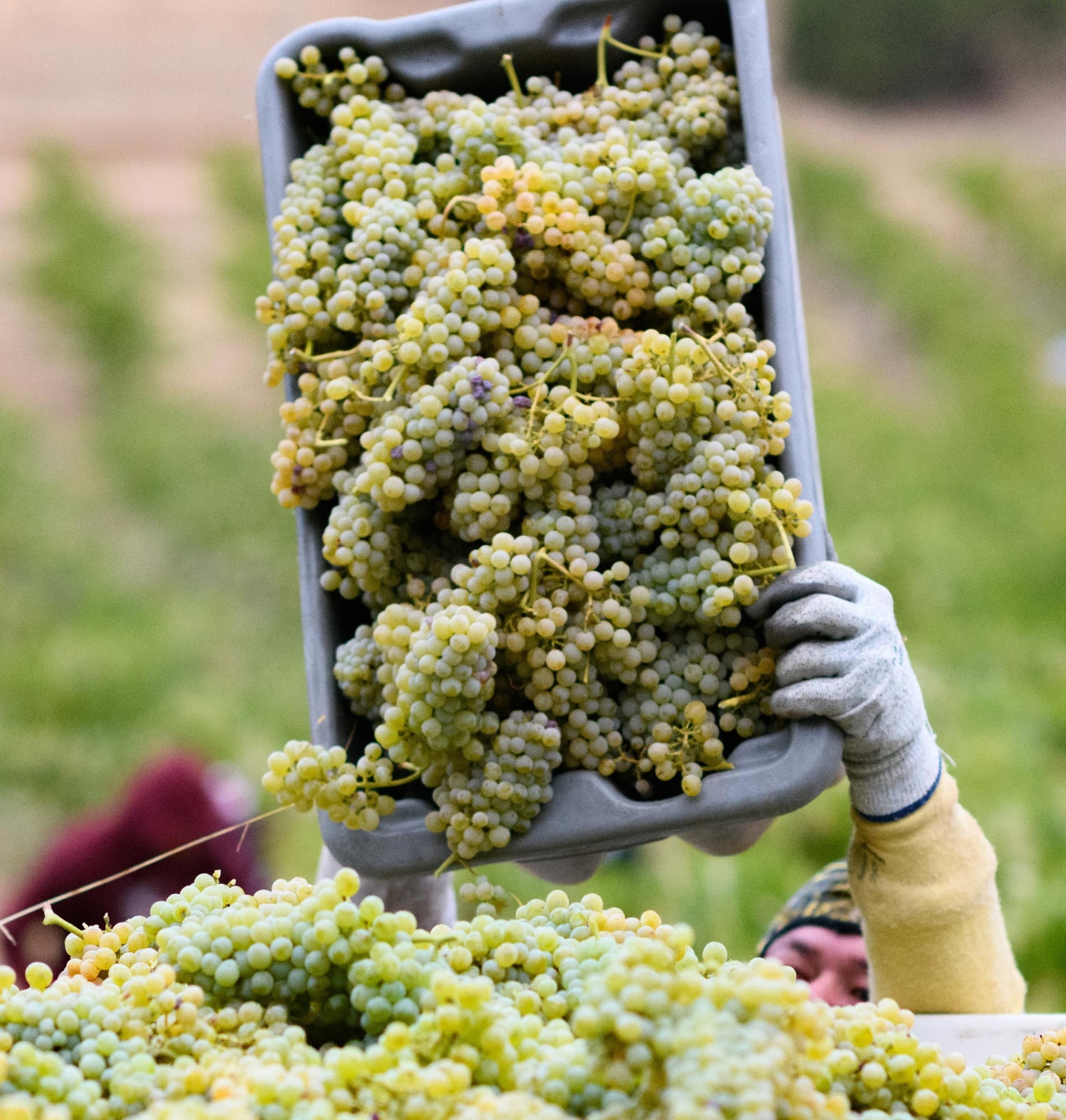
Something like “The Great Chenin Blanc Renaissance” has been a common article title here for a few decades now. But the one published recently on Wine-searcher was primarily about America. There, according to one quoted Napa restaurateur and wine shop owner, “chenin for a long time was pretty bad. Now it‘s spectacular.” One of the producers he cited as producing “really star stuff” was Tegan Passalacqua.
I first wrote about Tegan back in 2014, in a World of Fine Wine blog about the world of chenin, pointing for a start to the remarkably different conditions for the grape in its great heartland, the Loire Valley, compared to the Cape. In California, I added, “where chenin blanc has been despised much more than it ever was in the Cape, and is dwindling even faster and with remarkably few ambitious versions, there’s perhaps a hint of revival.” Any such revival, I suggested, “will in the first instance at least, have more to do with the South African example than the French”.
Tegan, winemaker at Turley, had a few years before come out to work a harvest in the Sadie cellar in the Swartland. There, I said, “he acquired something of an obsession with chenin that clearly survived his return to California”. I wondered if “perhaps a chenin revival is heralded in California too”. Now it seems that it’s arrived – a much smaller affair, of course, than the South African blossoming was. Unlike here, most of California’s chenin vineyards were long since pulled out to make way for more lucrative varieties (especially chardonnay and cab at the higher end, and zinfandel for cheap “white zin” at the lower).
The Wine-searcher article on the chenin “renaissance” does talk of South African chenin, and reports, as an example, on the recent retail success in the USA of MAN Family Chenin Blanc and of Lievland’s version, talking to winemaker and part-owner of the brands, José Conde. It’s notable, in fact, that Wine-searcher – internationally important and largely serving a rich US audience, I guess – has shown unusual interest in Cape chenin in recent years.
Its account of “The best Chenin Blancs of 2025” included six Cape and four Loire examples in its top ten list (talking of price and critics’ scores), The six were Sadie Mev Kirsten at no. 2, with Alheit Huilkrans the next Cape example, at 5; Sadie Skurfberg was 6, Mullineux Straw Wine at 7, Stellenrust Mothership at 8 (actually ArtiSons, and easily the least pricey wine on this list at $35); Sadie Rotsbank was at 9.
Very tellingly, however, the Wine-searcher list of not the “best” but the “most wanted” chenins of 2025 (according to users of the website) has only Mev Kirsten and Alheit Cartology in a sea of Loire wines. Prejudice as well as quality is vital and, as I read recently somewhere (but I’m damned if I can remember where), South Africa is “a country that seemingly always has to shout to be heard on the world stage”.
Also in Wine-searcher recently was a remarkably interesting (and positive) overview entitled South Africa and the Quiet Power of Chenin Blanc, by Maria Laura Ortiz. She makes some summary points about chenin well worth quoting here:
- In Europe, South Africa has established itself as the only credible alternative to France.
- In the UK, availability is close to parity between the two origins – a rare case where a New World country competes head-to-head in a historically Old World category.
- In the US, while France remains dominant, South Africa is the only non-European origin with sufficient scale to expand the category meaningfully.
The author adds that “Chenin Blanc is no longer South Africa’s signature grape – it is its structural anchor.” Of all the country’s varietal offerings, she says, “only Chenin Blanc combines scale, pricing power and differentiation simultaneously”.
The warmth of the current American welcome for chenin, as evidenced not only by the continuing Wine-searcher commentary, is fairly recent. I wrote last week about what seems to me the wrong path that the Chenin Challenge in its earlier years encouraged ambitious Cape chenin to take: sweet, ripe, powerful and oaky wines. I’ve just came across an article I wrote in 2012 called “The trouble with the Chenin Blanc Association”, complaining that the Association was then still advancing that style. A recent “Chenin Blanc Unveiled” event had been held in conjunction with Cape Wine 2012, and there were certainly many producers and serious wine drinkers who didn’t like the two styles being pushed: ““Fresh and fruity”, and “Rich and ripe”. I had done some research and found that, for example, only three of the twelve wines being shown could count as properly dry (below 4 grams per litre of residual sugar).
Drier, more refined styles seemed to be being ignored by the Association. I mentioned in that article that Eric Asimov, highly important critic of the New York Times, had recently reported on a tasting of Cape Chenin. On the whole, he hadn’t liked what he tasted (I suppose there wasn’t all that much being imported into America in 2012). He did approve of the Mullineux and Secateurs wines, but too many, he said, “seemed either flabby or dispiriting”. Ken Forrester FMC 2009, for instance, he found to be “sweet, oaky, unbalanced and fatiguing”.
Things have changed, happily, and that style has certainly been eclipsed at the top level. The Chenin Blanc Association still, however, thinks it adequate to say that the variety “is well known for its rich stylistic diversity, ranging from fresh and easy-drinking to full and rich with oak-barrel fermentation that makes for complex, powerful wines”. Diversity? Is that as far as their thinking goes? Where do Mev Kirsten and Huikrans fit into that formulation – an alternative rather than a continuum?
But that is just one instance of this rather humdrum website faltering in showing the modern history and excitement of the chenin renaissance in South Africa. Tellingly, the site is still (I’ve just checked) calling for entries for its Top 10 Challenge 2026, whose results were announced more than a week ago, and gives results only of last year’s competition. Cape Chenin deserves the best internet representation – for, amongst others, Americans with their interest piqued.
- Tim James is one of South Africa’s leading wine commentators, contributing to various local and international wine publications. His book Wines of the New South Africa – Tradition and Revolution appeared in 2013.
-
Share:

Related articles
Opinion & Analysis
Tim James: Why do we drink? And why do I?
5 October 2026
We all drink alcohol, it’s surely fair to say (unless there are some teetotal voyeurs – liseurs? – readingthis; “we” being the readers, extended to “people generally”). But why? That’s...
Opinion & Analysis
Tim James: A visit to Callie Louw’s Sonkop
28 September 2026
Fans of Callie Louw – there are many, and I think “fan” is the right word – will be pleased to know that all is going well at his new...

4
Opinion & Analysis
Tim James: The impossible task of picking SA’s Top 10 Chenins
14 September 2026
Have we hacks all written enough, not to say ad nauseum, about the glories of the Cape’s chenin blancs? I can’t think I have much more to say about it,...
Comments
0 comment(s)
Please read our Comments Policy here.