
Tim James: Who really wins at wine auctions?
By Tim James, 12 October 2026
-
Share:





1
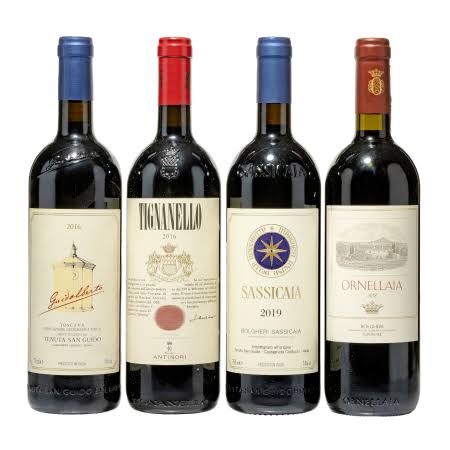
The Strauss & Co wine auctions began in 2019, in good time to benefit, as is clear in retrospect, from the pandemic that was soon to hit us. The stated aim was “elevate South African wines to the same degree of collectability as the visual and decorative arts”. To many ordinary wine lovers, however, I suggested at the time, the idea of wine becoming “an exciting new asset class” for the rich was not entirely welcome.
It’s been interesting since then to watch the progress in building a vibrant secondary market for South African wine. Talking of that first auction at the time, in a piece on “The rise of wine speculation in South Africa’, I expressed doubts about whether there was a large enough supply of genuinely top-end wine to allow for a sustainable system of auctions; also about whether the ageability of Cape wines was sufficient to justify speculation.
It’s probably still early days (remember what Zhou Enlai didn’t actually say about it still being too early to judge whether the French Revolution had been successful or not?), but the evidence has been equivocal. On the one hand, Strauss has successfully held a great many wine auctions – of both local and foreign wines – since then, many of them with all the lots on offer sold; and other auction houses have also found it worthwhile to dabble. (One such was Aspire, working with Rueda Wine Company; their last wine auction, in June, went pretty badly and in fact the auction house seems to have ceased business.) And there are other places that give evidence of a developing secondary market, like the brokerage section of Brice & Burnett.
On the other hand, as Michael Fridjhon pointed out in a little debate with Strauss’s Roland Peens on this website, offered volumes have been very small, which has helped sustainability. At least as importantly, the number of Cape wines that have been truly successful on the auction has been tiny, most notably from Kanonkop and Sadie, Meerlust, Klein Constantia (for Vin de Constance), Vilafonté, Alheit, and Mullineux, with Porseleinberg also very much there – but even not all of those overwhelmingly so.
I did some work on the Strauss records a year ago and demonstrated a degree of recent decline in prices and in sales. I pointed out that it’s not at all uncommon for wines to sell below the estimates offered by the auctioneer. More importantly, I argued, looking at the numbers, that although a few wines sold consistently at high prices, making a decent return for the sellers, that was certainly not true even for many pretty famous wines. One of many examples I offered was Le Riche Cab Reserve 2015 selling for little more than the current release, not even taking into account the seller’s commission (15%) to the auctioneer. That sort of thing is not untypical.
I’ve done some similar sums for recent auctions, and the picture is repeated: a great many sellers are not making much, or even any, profit on their original purchase price, especially taking inflation and costs of storage into account. This is often great for buyers, of course, and the auctioneer still takes two bites of the money . Just a few examples of the arithmetic here. In June, Alheit Cartology 2019 sold, below estimate, for R781 per bottle (including buyer’s premium-and-VAT). That would mean the seller received about R538 (after deducting seller’s commission-and-VAT on the hammer price; my thanks to Michael Fridjhon for working out the arithmetical formula that is quite beyond my capabilities). And R538 is very little more than the current retail price of the 2025.
Even more depressingly for the seller, David & Nadia Chenin Blanc 2019 sold, below estimate, for R547 per bottle in the same auction. The current retail price for 2025 is about R505. The Strauss seller would have received R377. Even Sadie Palladius 2019 went for just R1954 per bottle, and a case of 2017 went unsold. To return to my earlier example of Le Riche Reserve: the 2015 sold for a little more than it did last year, at R1563 per bottle (in a six-bottle case), meaning the seller got R1078 per bottle and would have to pay more to replace it with the current release.
The sellers were not exactly rejoicing, I imagine, in what was intended to be the nascent triumph of a secondary market for fine South African wine. As I say, a few wines are selling well in very small volumes, and buyers are getting some great bargains in fine South African wine. But sellers doing well? Not so much. A sustainable secondary market at this rate? Hmmm….
There’s a different but related aspect of the recent auctions that is intriguing me, and arguably gives further support to my early concerns about the sustainability of these auctions as originally conceived.
If the Strauss wine auctions were founded with a lot of trumpeting about “elevating” South African wines, and building a secondary market for them, well, that’s not at all how things are looking now. Let’s leave aside the Winemakers Guild auction conducted by Strauss, which is of course not about a secondary market. For Strauss auctions generally, non-South African wines now predominate in number as well as value (I strongly suspect that they have for some years been the biggest money-makers for the auction house). Possible sellers of local wines have lost some of their initial enthusiasm – and, dare I say, naivety? – or no longer have much in the way of excess stocks.
The current auction offers wines only “from Italy, Spain, Germany, the Rhône Valley and more”. September was “South African Wine Legends & Classified Bordeaux”; August: “Burgundy and Champagne”; July: “Italy, Spain and Portugal Fine Wine”; May: Bouchard Père burgundies; etc. June’s was in fact the only auction this entire year devoted entirely, to local wines and included everything from table wines through to brandy. The other 2026 auctions were entirely of often rather grand European wines, going for grand prices, or having South African wines as the minority component of the sale. I must say, in brackets as it were, that I have been somewhat stupefied to see the extent and depth and value of foreign wine holdings emerging from local cellars.
This current preponderance might just be coincidence, though I see no reason why it should be, and auctions in 2027 will tell a different tale. But I strongly suspect that the central intention to “elevate” South African wines and to develop the secondary market has been quietly subordinated by Strauss, and their wine auctions are just another place dealing in luxury goods for the rich – who clearly have a great deal of money and are more interested in spending it on the big wine names of Europe.
- Tim James is one of South Africa’s leading wine commentators, contributing to various local and international wine publications. His book Wines of the New South Africa – Tradition and Revolution appeared in 2013.
-
Share:

Related articles
Opinion & Analysis
Tim James: Why do we drink? And why do I?
5 October 2026
We all drink alcohol, it’s surely fair to say (unless there are some teetotal voyeurs – liseurs? – readingthis; “we” being the readers, extended to “people generally”). But why? That’s...
Opinion & Analysis
Tim James: A visit to Callie Louw’s Sonkop
28 September 2026
Fans of Callie Louw – there are many, and I think “fan” is the right word – will be pleased to know that all is going well at his new...
4
Opinion & Analysis
Tim James: America has discovered Chenin. Again.
21 September 2026
Something like “The Great Chenin Blanc Renaissance” has been a common article title here for a few decades now. But the one published recently on Wine-searcher was primarily about America. There,...
GillesP | 12 October 2026
Thanks for these insights Tim.
Indeed quite difficult to make good returns at the Strauss auctions especially after the high % commission if compared to auction houses in Europe as an example.
From my side, i see the auction as a way to offload wines i didn’t particularly raved about while i can re invest the proceeds into other wines available through the localimporters or sometimes purchase other wines from Strauss auction.
One rule for sure , never pay more than Wine Searcher average price or even lowest if possible. I am astounished on how many bidders overpay for some Bordeaux or Tuscans .
One of the great thing from these auctions is it brings opportunity to purchase some wines not imported locally by any specialist.