
Tim James: The impossible task of picking SA’s Top 10 Chenins
By Tim James, 14 September 2026
-
Share:





3
Have we hacks all written enough, not to say ad nauseum, about the glories of the Cape’s chenin blancs? I can’t think I have much more to say about it, but some bits of repetition sometimes have value – if a personal nostalgic twinge qualifies as that. I’ll come to the reason I was thinking about chenin now, but it suddenly prompted the memory that my first bit of published writing about wine had chenin as its subject.
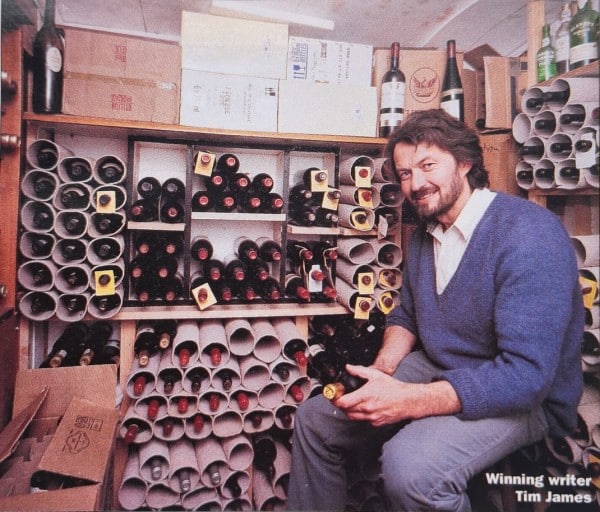
Exactly 30 years ago, one of the topics for entrants for the New Winewriter of the Year competition being run by Wine magazine (the approximate forerunner of this website) was called something like “Chenin blanc – the Cinderella grape”. It was 1996 and, energised and made hopeful by post-1994 developments in the industry as well as the wider society, we were in the early stages of the transformation of chenin to stardom from mere “workhorse variety” (that, like “Cinderella grape”, was one of the clichéd images at the time).
Back then, I was concerned that complacency and high yields suppressed Chenin’s potential but noted that there were initiatives afoot that might be reason for optimism about the variety’s future – see Suppressed Magic – Chenin Blanc in South Africa. The subject was no doubt chosen to fit in with the Chenin Blanc Challenge that Wine, together with Michael Fridjhon, was inaugurating that year, as a way of encouraging quality from producers and respectful interest from wine-drinkers. There had already been strong signs that Cinderella was stirring restlessly in her sooty subordinate place, but the Challenge was certainly auspicious for local chenin’s growth in reputation.
Cinderella’s complicated transformation
Just how significant it was is controversial. Some years ago, I wrote a Winemag piece rather grandly entitled “Different readings of the modern history of SA Chenin Blanc”. I was disputing Michael’s article that drew a straight line from the Challenge to the current situation. I argued that the competition had persistently encouraged over-oaked, over-ripe, sweet and alcoholic styles much like those obtaining in chardonnays at the time – a practice that led nowhere useful, and perhaps even retarded things. The drier, more restrained and elegant, mostly old-oaked, style that is dominant now was born and bred in the Swartland in the late 1990s and early 2000s, from wines that had resolutely nothing to do with the competition. It swiftly moved outward from there. Swartland was also the birthplace of the hugely successful, and uniquely South African, chenin-based blend that augmented the reputation of the grape in its African iteration.
True, the Challenge did bring attention to chenin and declare it a suitable vehicle for ambitious winemaking here (however misplaced that version of ambitions ultimately proved). The debate was interestingly continued in the comments to my 2018 article – worth looking at for those who are interested in how we got to where we are now.
Anyway, to repeat, the stirrings around chenin were partly how I got launched on my own modest, semi-amateur wine-writing trajectory in the mid-latter 1990s.
Returning to the present. This latest edition of my chenin commentary was prompted by the announcement of the winners of the 2026 Chenin Blanc Top 10 Challenge. This reformulated annual chenin competition was started by the Chenin Blanc Association in 2014. Although the media release came on Friday, the results are not yet, at the time of my writing, posted on the Chenin Association website, which seems a bit odd (though I must say that the website is generally rather inadequate and lacklustre, especially in offering no proper perspective of the history of chenin’s role in the South African wine industry). So here they are, alphabetically:
- Beaumont Family Wines Hope Marguerite 2025
- City on a Hill Old Vine 2024
- DaschBosch Mossiesdrift Steen 2025
- Groot Phesantekraal Anna de Koning 2024
- Painted Wolf Lightning 2024
- ArtiSons Family Winery Mother Ship 2025
- Stellenrust 61 Barrel Fermented 2025
- Stettyn Old Vine Chenin Blanc 2025
- Wildeberg Terroirs 2024
- Zoetendal 2022
Too much good Chenin to fit into a Top 10
That seems a respectable line-up. My immediate thought was that probably the 150 entries from 97 producers could provide at least one more list of ten wines that would have been equally plausible. It’s what I thought about, for example, the Platter’s five-star chenins each year, when I was involved in the Guide. The result of agonising hairsbreadth judgements to bring down the large number of nominated wines – many of the failures at least as plausible as the final awardees (just think of the years in which Alheit got very little reward, for example).
It’s interesting in this light to compare the Challenge results with those of other blind-tasting competitions (obviously with only an overlap in entrants, few with as many). I mentioned Platter’s: only one of the Challenge Top 10 was a Platter’s five-star wine: ArtiSons Mothership (they spell it correctly, as one word, unlike the Challenge). I also looked at the results of Winemag’s Chenin Report (Top 10), Trophy Wine Show (the six chenins scoring 95 or more), Michelangelo (a dozen Platinum and Double Gold), and Veritas (nine Double Gold). Most of them also more-or less plausible lists. But very little overlap with the Challenge results (Groot Phesantekraal featured in two others), and only the occasional one between themselves.
From all of which I easily draw my main conclusion – there are a lot of plausibly award-winning Cape chenins out there. But we all knew that already, of course. What would be interesting but unconclusive, if I had the energy, would be to compare all the prices, because we all also know (or should) that there are many great bargains on ofer, as well as some wines that are comparatively, aspirationally overpriced.
Talking of which, it’s also worth noting (but I think this is yet again something we know) the omissions from all the lists. The handful of chenins established as the Cape’s most prestigious, and usually the most expensive, are nowhere to be seen in the competition results. While some unknown – and sometimes, frankly, very lucky – wines can get a break from getting to the competition top ranks, some of the grandest chenin names (Alheit, Sadie, David&Nadia, Badenhorst, Botanica, and some others) have nothing to gain by entering. Whether they have something to lose by being dissed is another matter. Perhaps. But more likely it would be the competition organisers and judges whose reputations would suffer (as Platter’s did with all the Alheit failures), even if relatively few people notice results down the list.
- Tim James is one of South Africa’s leading wine commentators, contributing to various local and international wine publications. His book Wines of the New South Africa – Tradition and Revolution appeared in 2013.
-
Share:

Related articles
Opinion & Analysis
Tim James: Who really wins at wine auctions?
12 October 2026
The Strauss & Co wine auctions began in 2019, in good time to benefit, as is clear in retrospect, from the pandemic that was soon to hit us. The stated...
6
Opinion & Analysis
Tim James: Why do we drink? And why do I?
5 October 2026
We all drink alcohol, it’s surely fair to say (unless there are some teetotal voyeurs – liseurs? – readingthis; “we” being the readers, extended to “people generally”). But why? That’s...
Opinion & Analysis
Tim James: A visit to Callie Louw’s Sonkop
28 September 2026
Fans of Callie Louw – there are many, and I think “fan” is the right word – will be pleased to know that all is going well at his new...
Angela Lloyd | 14 September 2026
I think you would have done a well-deserved service to Stellenrust by including them among the grand chenin names. They always enter the Chenin Challenge (& other competitions) with multiple entries, & invariably are awarded more than one wine in the Top Ten (or equivalent in other competitions. Quality is maintained across the range &, compared with some of the ‘grandest’, their pricing is reasonable to great value. The maturing power of the Barrel Fermented (61 this year) is rock solid.
Melvyn Minnaar | 14 September 2026
Couldn’t agree more about Stellenrust, Angela.
Tim James | 15 September 2026
Stellenrust is indeed a top chenin producer, Angela. As to “always” and “invariably”, not so in the case of the latest editions of other competitions I looked at, where Stellenrust didn’t feature in the top awards. Platter’s 2026 gives one of their chenins five stars – as well as the ArtiSons.