
Tim James: The world loves SA wine. So why is it so cheap?
By Tim James, 16 November 2026
-
Share:


There’s unquestionably a disjuncture between the international reputation of top-end South African wines and the comparatively modest prices they achieve. This is irritating or galling to various groups of people – producers wanting to make more money, patriotic souls seeing it as a national insult, and those who are merely bemused by the unfairness and hypocrisy, and amused by what it reveals about the authenticity of the values of the world’s rich wine-lovers. I’m somewhat in the last of these camps. Certainly, I don’t feel indignant that those fine producers are not making more than the considerable amounts they already pocket – especially as I’m already unable to afford many of their products. I’d like the other wines to become cheaper, not for our best to be more expensive.
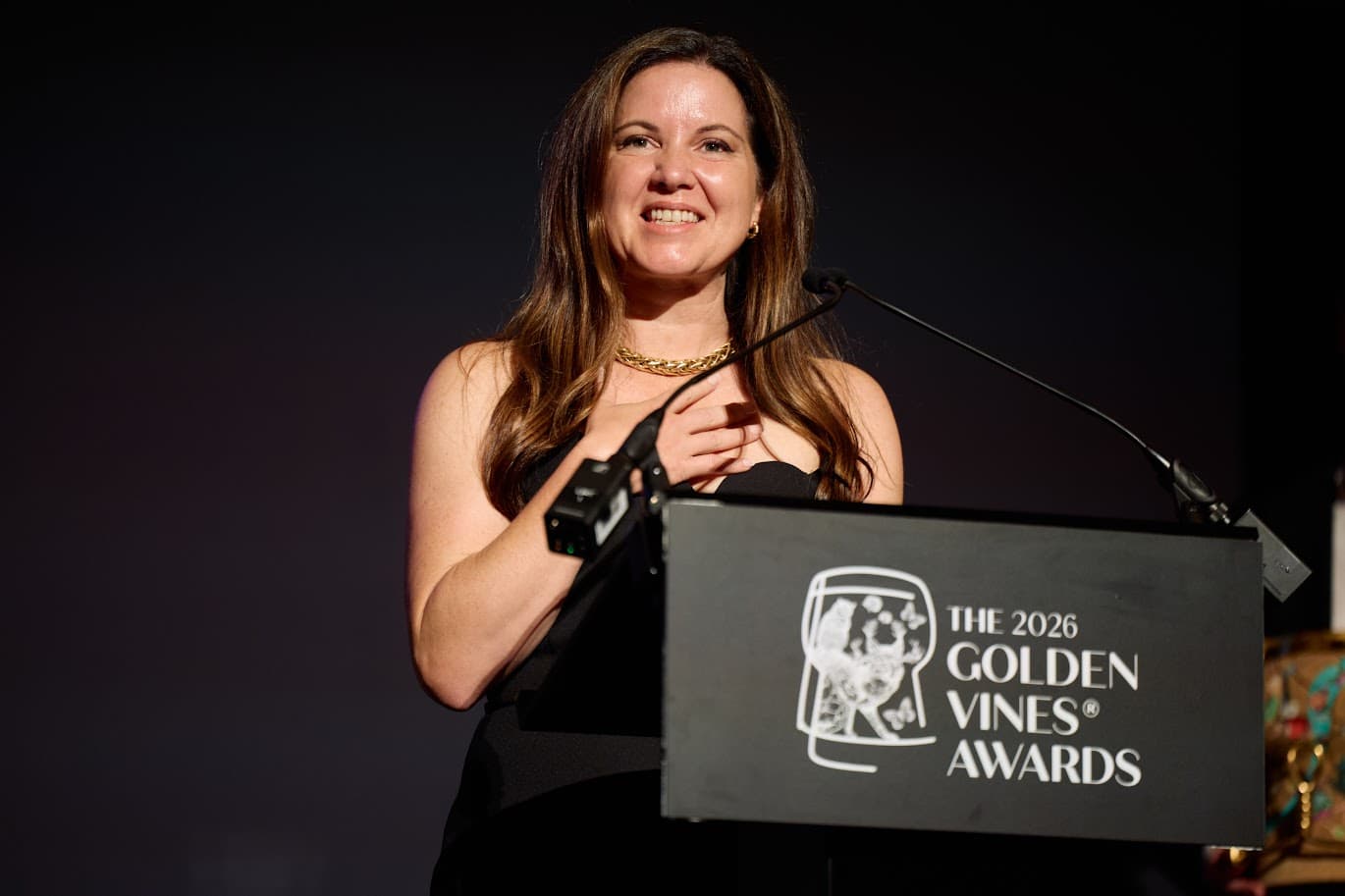
One recent event highlights to me the disjuncture, while another claims to be doing something about jolting it. First, the Golden Vines are a grand, important and highly visible set of nine awards made annually. Even the repetitive nature of some of the award-winners is testament to these awards being something more fundamental than the usual blind tasting nonsense. They are voted for by some 1,300 invited international wine and spirit professionals of all types.
The loftiest of the awards is to the World’s Best Fine Wine Producer (this year again Vega Sicila, edging out Domaine Leroy and Krug). No interest for South Africa there yet, but 2026 for the second time saw Mullineux & Leeu receiving the award for the World’s Best Rising Star, with Alheit also in the top three, along with Comando G of Spain. (Personally, I find it a bit odd for the two separate wineries of Mullineux and Leeu Passant to be lumped together, but it arguably makes some sort of sense). Sadie Family Wines had won this category for a few years, but in 2026 was promoted, as it were, to take over from Australia’s Henschke as Best Fine Wine Producer in the Rest of the World (i.e. not Europe or the Americas, which have separate awards).
These are all remarkable achievements (to which can be added last year’s Innovation award to Rosa Kruger and the Old Vine Project). They evidence the high regard in which the Cape’s top wineries are held internationally. Congratulations to all involved. But consider Sadie in relation to the other two wineries in the top three of that category: Henschke and Felton Road (New Zealand), and to the other regional finalists, Bodegas Catena (Argentina), Harlan Estate and Screaming Eagle (USA), Giacomo Conterno and Gaja of Italy, and Chave of France.
All those very famous wineries are here effectively declared the quality equivalents of Sadie and near-equivalents of Mullineux & Leeu and Alheit. If, however, you look at the prices they achieve in the world, the disjuncture I mentioned becomes ludicrously obvious. I reckon in many cases you could buy a dozen or many dozen bottles of their wines for the price of one top bottle from the local producers. But we already know that, and have our reactions well practised.
Eight wineries take the fight global
What to do about the situation (if you think it needs responsive action)? Two of those local awarded wineries (but with Mullineux & Leeu apparently reduced to just Mullineux) have joined up with six other eminent wineries in a grouping that claims to be trying to change the situation. In addition to Sadie and Mullineux from the Swartland, there are Hamilton Russell Vineyards and Restless River from Hemel-en-Aarde, Kanonkop and Meerlust from Stellenbosch, Klein Constantia from Constantia, and Vilafonté unusually proclaiming that its wines originate from Paarl. Building on joint presentations at recent Cape Wines, they call themselves simply The Eight Wineries. All are family-owned businesses with track-records and degrees of international prestige, and, crucially, are able to afford the costs of the international programme of events they plan. The first joint presentation abroad was in London a week ago. Copenhagen will follow, with Dubai and Abu Dhabi next year, then Hong Kong, Tokyo, Beijing and Shanghai.
Mike Ratcliffe of Vilafonté, long known as wanting to raise the prices of the best Cape wines, seems to be the driving force and the spokesperson. In an interview last week with The Drinks Business he insisted that this is not just another marketing group, that the purpose is to promote South Africa as a whole: “We are South Africa first. Our story is that the fine wines of South Africa are starting to come of age. At the end of the day, we are flying the South African wine flag.” As a group of wineries with an established presence, he says, they have “enough clout to fill a room”.
This focus is stressed by the group members I have spoken to – though it would surely be naïve to think that they don’t expect the time and effort and money they’re spending to also supplement and benefit their own marketing efforts. I daresay there are different degrees of altruism and self-interest involved.
Chris Mullineux told me that “We are working together to get our wines in front of the right people – sommeliers, fine wine merchants, serious distributors, etc. Basically, getting access to people who work with fine wine, and not looking for wines they can sell on price. I often do this on my own when I travel to present our wines, but it’s so much easier to get these busy people in a room when there is more than just one winery of interest to them.” And he hopes for wider benefits “if we can in a small way change the perception that South African wine’s main strength is that it is cheap”.
Anthony Hamilton-Russell summarises thus: “The value of this informal grouping, united by high mutual respect, is less for us as individuals and more for raising the profile of South African fine wine”. Eben Sadie also insists that “this is not a marketing gig” and that “taking South Africa forward” is the group’s aim. He underlines that current-release wines are not at the centre of the events. A crucial point, he says, is to show the ageability of Cape wine, which is “a major thing to be defined if you want to be seen as a fine wine country”. At the London event, for 120 trade guests, he poured Columella from 2005, 2013 and 2023, and Palladius 2007, 2013 and 2022. Hamilton Russell offered Pinot Noir 1999, 2008, 2017 and Chardonnay 2016 and 2018, as well as the current 2025s.
Sadie says that “the response has been insane. People cannot believe that South Africa can be that ageworthy”. Let’s see what they’re prepared to pay for it.
- Tim James is one of South Africa’s leading wine commentators, contributing to various local and international wine publications. His book Wines of the New South Africa – Tradition and Revolution appeared in 2013.
-
Share:

Related articles
Opinion & Analysis
Tim James: Three cool Pinotages for a hot summer
9 November 2026
I rather surprised myself last week, when writing about wine-grape crosses, by suggesting that pinotage is, both internationally and locally, an unusually successful one. I think it might be worth...
Opinion & Analysis
Tim James: Travels and wine – a few irritations, some great bottles
26 October 2026
Something was needed, I thought, to jolt me from my rut. So I resolved on a rare foreign break, despite all the awfulness and anxiety (as it seemed from the...

4
Opinion & Analysis
Tim James: Who really wins at wine auctions?
12 October 2026
The Strauss & Co wine auctions began in 2019, in good time to benefit, as is clear in retrospect, from the pandemic that was soon to hit us. The stated...
Comments
0 comment(s)
Please read our Comments Policy here.