
Tim James: Why Kleine Zalze deserves a second look
By Tim James, 15 June 2026
-
Share:




Looking back at the last time I visited and wrote about Kleine Zalze, in 2020, I find I had a thought that I have this time modified a little. It’s difficult, I concluded then, for a large producer with a wide price and quality range in its offering to have the right sort of image to get the reputation it deserves for the wines at the higher level. And to get the deserved price, of course – which means some good buys for those more concerned about the wine than its having family on a supermarket shelf.
In terms of price, that’s not quite as true for Klene Zalze anymore, which is now asking more than modest prices, though still offering good value for the quality, especially of its white wines. As for its image in the serious wine world, it’s perhaps significant that only new releases from the comparatively expensive experimental Project X range (prices up to R600) are regularly tasted by Christian Eedes on this website (with a degree of enthusiasm; see here for the latest review). I believe wines from the standard ranges are entered for the Prescient Report category tastings, but the last day-to-day tasting of one of them was in 2019, looking at one of the two winning KZ wines in that year’s Chenin Blanc Top 10 Challenge. It’s arguably a pity that the standard wines suffer from a vaguely “mass-produced” image, for there’s now much to offer genuine wine lovers, apart from pretty good value.
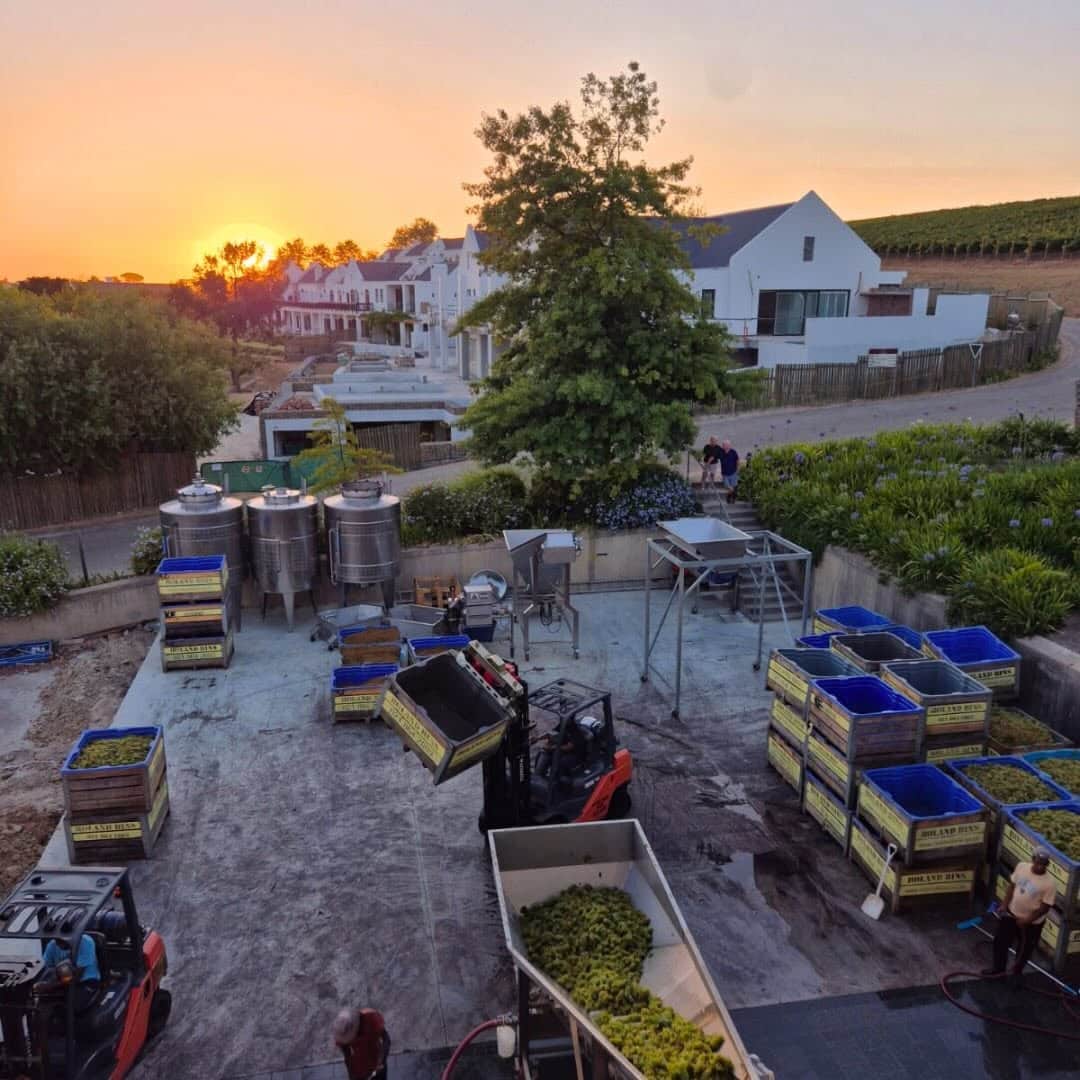
There were some significant changes I found on this visit compared to my last. The following year cellarmaster Alastair Rimmer moved to DeMorgenzon (where he stuck out three years before leaving to become a consultant). His former winemaker, RJ Botha, took over back at the Helderberg and is doing, it seems to me, a fine job (even if intimations of stylistic change that Alastair inititated have not much picked up pace). Then the brand and winery were sold in 2022 by founder Kobus Basson to become part of the French AdVini company’s already significant South African portfolio. That has had no obvious impact on the wine offering, and Botha and current CEO Carina Gous (formerly a senior player at Distell) seem genuinely appreciative of the nature of the French involvement. New investment has been forthcoming – most usefully, there’s a major rebuilding and revamping of the winery and the hospitality area underway. The winery had grown bit by bit over the years to accommodate larger production (and such acquisitions as 20 beautiful Italian clay pots) and needed a total revamp in the interests of efficiency above all.
Apart from Project Z, the two ranges that should be of most interest to Winemag readers are the Vineyard Selection (VS) and the Family Reserves (FR) at the top. (I didn’t taste any of the Cellar Selection, where reds sell for R105 and the others for R92). VS whites sell for R170 and reds for R230. FR whites are R315, reds R510. The focus and strength at Kleine Zalze is in, particularly, Chenin Blanc and Cabernet Sauvignon.
But I started with Sauvignon Blanc. If you are a diehard fan of the grape you’ll probably love the VS version, but I’m not and I didn’t. In the old days KZ sauvignon was full of pyrazenes, as the fashion was. Now the 2025 is pungently, excessively, expressive of everything else, especially tropicality. I was happy to give a quick shudder and move on to the 2025 FR version, which is a great deal subtler. Wholebunch-pressed and with time spent in barrel, claypot and concrete eggs, it does have plenty of flavour as well as being textured and succulent. RJ Botha himself suggests that this variety offers “the biggest jump in our portfolio”.
The 2025 Chardonnays are both good. The VS, from Stellenbosch and Robertson is firmly balanced, fresh and quite forward, hinting at the element of new oak. The FR version, introduced only a few years ago, is from two Stellenbosch parcels, wholebunch-pressed and fermented half in barrel, half in concrete egg. It has fine flavours, and a beautiful lipsmacking acidity. At just 12.5% alcohol, with the concrete accentuating the dryness, it has that delicious effect of licking riverstones.
But it’s the Chenins which are the standout Kleine Zalze variety – and accounting, I believe, for about half of their whole business. Taste the VS 2025 version and it’s obvious why the label sells some 200 000 bottles annually. It is somewhat rich (there’s a little residual sugar tucked away), nicely cut by freshness and unquestionably delicious. Even those who most love ultra-refined, steely chenins would surely find a place in their heart for this wine. And there’s serious pedigree too, expressed in the Old Vine Project’s Heritage Vineyard seal. It actually comes from up to 25 different dated Stellenbosch vineyards (off a dozen or so farms) planted between 1977 and 1989. Fermented in clay, concrete and oak (none new), around 13% alcohol. I tasted both the 2024 and 2025 vintages of the Family Reserve (off two heritage vineyards) – the latter inevitably more intense and full, while elegant and fresh with a lovely acidity; dry enough, but also a cunning bit of natural sweetness at its core. Great drinking now, but will certainly mature with interest.
The reds I find far less interesting and valuable than the whites, with something of a dichotomy of approach between the two genres – as though Kleine Zalze is far more worried about modernising and lightening its reds. Of course, this is true for much of Stellenbosch production as a whole, so why should one hope for KZ to make a significant shift? The 2022 Syrahs are okay, perfectly adequate examples of the style, and the FR Stellenbosch version is worth its premium. But for me they are still too reminiscent of the very ripe, extracted and oaky wines that detracted from Klene Zalze’s reputation in the past (and no doubt gave it many very satisfied customers, who remain important).
The Cabernets are superior to the Syrahs, though also still too committed to the traditional style. Interestingly, the “experimental” Project Z Cabernet Sauvignon 2022, which is a degree or so lower in alcohol, and saw no new oak (entirely fermented and with seven months in those Italian clay pots) has a purity, lightness and structured freshness that one misses in the standard reds. Undoubtedly a controversial wine, but one must hope that the advantages of the experiment will be very apparent to all and prompt a bit more emphatic change in the Vineyard Selection and Family Reserve wines. As they stand now, I actually prefer the rather more modest VS version, which has a pleasing degree of fruit purity and clean-cutness, its richness and intensity under control and 20% new oak not egregious.
There’s no space here to say much more about the Project Z wines. They differ annually, of course, being largely experimental – as well as, I guess, giving the winemaking and viticultural teams a bit of excitement beyond the normal. But all those I’ve had are genuinely interesting and well worth trying. Again, the whites are particularly so. Unfortunately, the 2023 blend of palomino, alvarinho and chenin – unique and characterful and perfectly poised at 11.5% alcohol – is sold out.
But look out, later this year, for a Piekenierskloof Palomino – perfumed, fresh, naturally fermented and crunchily succulent. Not to mention the blend of alvarinho and Ceres riesling – intense but subtly intricate, with a brilliant acidity. I must say, Kleine Zalze under RJ Botha is doing really well with its experiments, and I’m sure there’s some trickle down – but picking up the pace towards less ripeness and power in the reds (and even perhaps a touch less residual sugar in the chenins) would be welcome.
- Tim James is one of South Africa’s leading wine commentators, contributing to various local and international wine publications. His book Wines of the New South Africa – Tradition and Revolution appeared in 2013.
-
Share:

Related articles
Opinion & Analysis
Tim James: Who really wins at wine auctions?
12 October 2026
The Strauss & Co wine auctions began in 2019, in good time to benefit, as is clear in retrospect, from the pandemic that was soon to hit us. The stated...

6
Opinion & Analysis
Tim James: Why do we drink? And why do I?
5 October 2026
We all drink alcohol, it’s surely fair to say (unless there are some teetotal voyeurs – liseurs? – readingthis; “we” being the readers, extended to “people generally”). But why? That’s...
Opinion & Analysis
Tim James: A visit to Callie Louw’s Sonkop
28 September 2026
Fans of Callie Louw – there are many, and I think “fan” is the right word – will be pleased to know that all is going well at his new...
Comments
0 comment(s)
Please read our Comments Policy here.