
Jamie Goode: Can terroir survive climate change?
By Jamie Goode, 3 August 2026
-
Share:




There’s a lot of discussion about the change in climate. Currently, in the UK, we are in the middle of the hottest summer ever, and the last hottest summer ever was in 2022, just four years ago. It has been like California here: hot and dry, and actually quite pleasant if you like it hot. But weird, and not the weather usually associated with the UK. Meanwhile, Bordeaux and other more southerly locations have been burning. It’s all a bit apocalyptic.
This brings us round to the notion of terroir. Let’s take Burgundy as an example, which over recent decades has become a place of pilgrimage for wine lovers around the world. In the Parker era, Bordeaux was the pre-eminent wine region; now Parker has stopped and the world has moved away from the somewhat childish tastes of big, ripe, expansive, expensive oak-laden reds and discovered the magic of elegance and place over power, Burgundy is the hallowed ground that wine lovers trek to with reverence and longing.
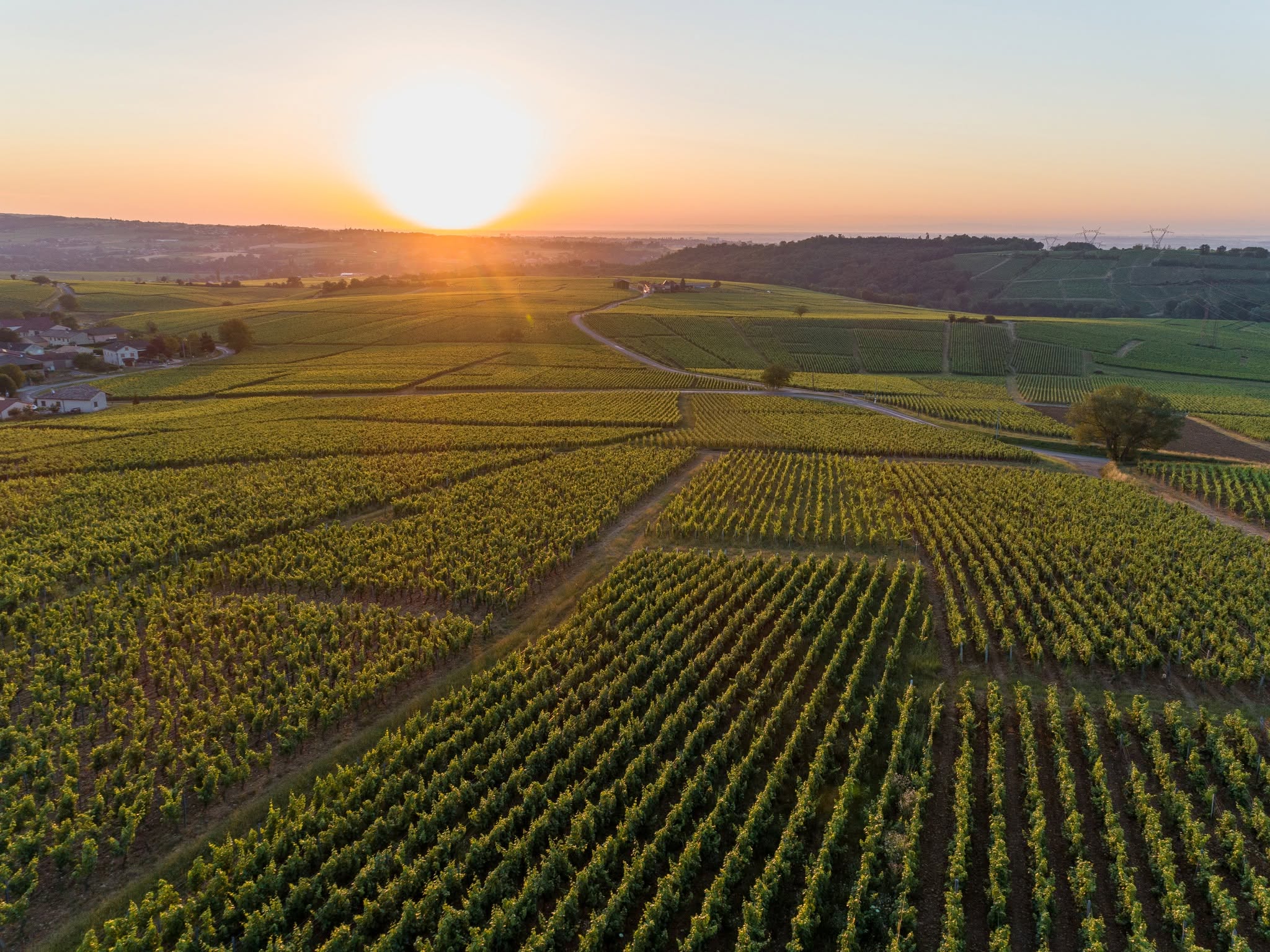
There are 1,247 climats in Burgundy, on a patchwork of vineyards that threads along 60 km of gentle slopes, running from Dijon to the south of Beaune. These are patches of land recognized as individual terroir units, and together with the hierarchical classification of regional, village, premier cru and grand cru, we have this most beautifully organized presentation of terroir in the world. The status of each parcel tallies well with the soil and underlying geology, as well as the place on the slope. The climats achieved UNESCO world heritage status in 2015.
And these patches of land are then interpreted almost exclusively through the lens of two grape varities: Pinot Noir and Chardonnay.
But with the change in climate, which has been chaotic, but which has had a clear warming trend, there’s worry that these two remarkable varieties may no longer be faithful conduits of terroir in Burgundy. The fear is that when the climate is changed, the hard work that has led to the identification of these terroirs will begin to unravel.
The theory behind this is that there are windows of terroir expression in terms of grape ripeness. The signal of terroir is lost if the grapes are picked too early, or too late; it is also lost if there is too much ripeness in the grapes, even if they are picked at the right time.
With a warmer climate, there may be vintages where Burgundy from top sites just tastes like good Pinot Noir or good Chardonnay, and not the complex, nuanced wines that fetch top dollar. This would be a big problem, because customers aren’t going to welcome paying a lot of money for wines that are just good varietal wines, rather than great wines of place.
There are of course two aspects to terroir in fine wines. One is the absolute quality potential. Only some sites have the potential to make wines of the very top quality. These places are prized because they make great wines. Whether or not you can taste the place is a secondary issue.
The second is postcode. Great terroirs that express themselves in such a way that you can recognize the place in the wine, or at least some people with the right experience can recognize the place in the wine.
Both aspects of terroir are valid, and both are potentially at risk with climate change.
This brings us to a number of questions. Is the risk real? Yes, it’s getting hot, but Pinot Noir and Chardonnay are still working here. How long will this continue to be the case? We don’t know. One possibility is that altering the viticulture in the region from the way it is currently done in the fancy vineyards (10 000 vines per hectare with a low fruiting wire and low canopy) to the way that it is being done in the less fancy Hautes-Côtes (wider row spacing, higher fruiting wires, bigger canopy) will give some more headroom to the regions. This view was suggested by a wine scientist I interviewed in the region in April when we were filming an episode of The Science of Wine on this topic.
As for switching to other varieties more suited to a warmer climate, this is a very complicated thing to consider. The terroir focus of the region is all about Pinot Noir and Chardonnay expressing the various climats. With new varieties, we might have to start again, and reexamine the climats and their potentials. But with the vast number of growers in the region, and the intricacies of how business is done, this can’t be implemented top down, and grape prices might prevent growers from experimenting with alternatives. There is just too much at stake here to start playing around.
Of course, terroir isn’t owned by Burgundy, and it isn’t restricted solely to France, or solely to the classic regions in the ‘old world’. Other regions will find it easier to experiment and modify their vineyard area with a view to a climatically different future.
Some places are currently climate change winners: Germany and the UK spring to mind. But for most, it is causing problems. Drought and water availability are key issues in many southerly vineyards sites (in the northern hemisphere), and without water you don’t have any terroir!
I think that more emphasis should be made of viticultural shifts that can buy headroom and resilience. Resilient vineyards are going to be very important, because while there are many vintages that are warmer, we are really seeing climate chaos, and some will be wetter, some drier, and some colder. Treating the vineyard as an agroecosystem and encouraging effective biodiversity will really help in this pursuit of resilience.
Ultimately, terroir is a partnership between winegrower and place, and there is a strong human element. Terroir will survive, but it might be a rather different expression of place. Skilled winegrowers will manage to keep place central in their wines even if vintages vary and it’s getting warmer and drier, but only up to a point.
Jamie Goode is a London-based wine writer, lecturer, wine judge and book author. With a PhD in plant biology, he worked as a science editor, before starting wineanorak.com, one of the world’s most popular wine websites.
-
Share:

Related articles
Opinion & Analysis
Jamie Goode: Zero-alcohol wine has a problem – it doesn’t taste like wine
5 October 2026
A few years back (2009) I was enlisted by a wine company specializing in lower alcohol wines, for me to give them some market support. As someone with a technical...

1
Opinion & Analysis
Jamie Goode: Old vines won’t survive on sentiment alone
3 September 2026
Wine has been going through some changes. It has always been going through changes, to be honest. In classic wine-producing regions, we’ve had a long shift from the need for...
Opinion & Analysis
Jamie Goode: Tasting notes – do they matter?
9 July 2026
I’ve recently been exploring speciality coffee, and took a trip to Brazil to see the coffee harvest, and observe how the cherries are processed. I also did a cupping session,...
Comments
0 comment(s)
Please read our Comments Policy here.