
Jamie Goode: Old vines won’t survive on sentiment alone
By Jamie Goode, 3 September 2026
-
Share:




Wine has been going through some changes. It has always been going through changes, to be honest. In classic wine-producing regions, we’ve had a long shift from the need for large quantities of cheap wine to feed the heroic thirst of the masses. People in Portugal, France, Italy and Spain used to drink a lot of wine. The big need was for volume, and so industries geared to supply lots of cheap wine have been retrofitted to produce better quality wine for a more discerning and less thirsty customer base. It has been an uncomfortable process, and it’s still ongoing. In other countries wine has been growing and people have been drinking more, but even this growth has seen a bit of contraction of late. And it’s uncomfortable to watch, because people and their livelihoods are impacted.
The danger is that in this contraction process, it’s not only the less impressive vineyards that are being pulled out, but also some rather special vineyards. A case in point is in the notorious vine pull in Australia in the 1980s, where some very special old vineyards in regions such as the Barossa were taken out. Because of the absence of phylloxera in South Australia, the Barossa has a lot of old, ungrafted vines. There are more than 100 hectares of centenarian vineyards there.
And in Spain, were it not for the efforts of Comando G and their buddies, many of the amazing old Garnacha vineyards that simply weren’t profitable would have been pulled out. It’s strange how fashion changes: in the peak Parker era everyone wanted big, dark, bold wines – something that Garnacha can’t do easily. Now we cherish the fragrant, lighter-coloured reds that old vine Garnacha is an absolute specialist at.
Globally, there are many special old vineyards. They are a treasure, but they aren’t always treasured. Should there be laws protecting them?
When I was at university, one of the courses I took in my degree in biological science was on conservation and wildlife management. I really enjoyed it, to the point that I even considered doing a research job in ecology. There were two things I took away from this course. One is that if you want to conserve rare species, you need to focus on preserving their habitat. The second was that the only conservation that really works is conservation that pays. If an ecosystem or a species becomes an economic resource, then people will preserve them.
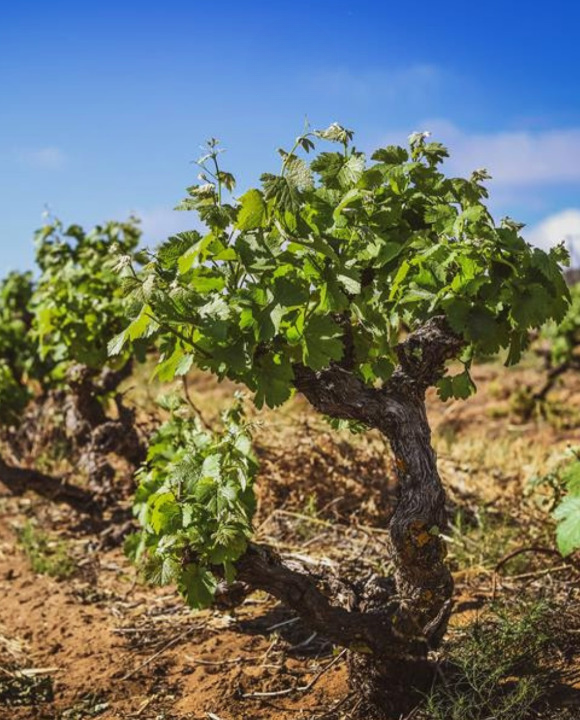
This is exactly the approach that has been taken by the Old Vine Project in South Africa, and it has been fantastic to watch this amazing initiative develop. And I guess imitation is the sincerest form of flattery: the model has been adopted by others. When Rosa Kruger set out to produce a list of vineyards over 35 years old in South Africa, this gave producers in search of old vines a chance to connect with growers. Previously, the fruit from many of these vineyards was being sold too cheaply, and disappearing into big blends where its origin was never recognized.
How do you keep precious old vineyards in the ground, rather than let them be bulldozed? I guess you could give them protected status, but for a vineyard to continue, it has to be farmed, and you can’t force a farmer to maintain a vineyard if they aren’t making money for it. And governments can’t easily pay farmers to preserve some vineyards and not others.
The best way to keep great vines in the ground is to value them. And the Old Vine Project does just this. Winemakers with ambition buy grapes from heritage vineyards and pay a premium that makes farming them pay. The growers are rewarded, and the bulldozers stay away. The Old Vine heritage seal is a great initiative here, and it means that suddenly cooperatives who were previously putting old vine grapes into an inexpensive wine can now make a separate wine from the old vines, add the heritage sticker, and charge R200 for the bottle. The seal acts as a strong buying cue. Everyone benefits.
Part of the dynamic here is having ambitious landless winemakers who want to make something special, and are able to because there is a culture of growers owning vineyards who are willing to sell these grapes. South Africa has a nice dynamic where winemakers working for large companies are allowed to do a bit of home brew: to start their own brand. Sometimes there are restrictions: perhaps a case limit of the new brand, or a stipulation that they use varieties other than used by their employer, to avoid conflict of interest situations. But the general permissiveness of winery owners in allowing their winemakers to have side projects is good for everyone, I think. It keeps the winemaker fulfilled professionally, it allows them to build their own brand gradually, and the dynamism created by new producers and new projects is good for the overall health of South African wine.
And, of course, this creates customers for old heritage vineyards, keeping them in the ground.
On a regional level, there is something to be said for legislation to protect significant vineyards. This is important where land has value for redevelopment. If it is zoned so that no one can build homes, but it has to be kept as agricultural land, then this is valuable. Urban spread is threatening many wine regions, and some legislation could help here. I was recently in the Hunter Valley, a brilliant historically significant Australian wine region. With its proximity to Sydney, this is quite a playground for city folk. If economics is left to decide the destiny of the land, then it’s likely that the vineyard area will further contract. You could end up with a wine region popular with tourists, but with hardly any vineyards.
But the best way to preserve important vineyards? Make them pay!
- Jamie Goode is a London-based wine writer, lecturer, wine judge and book author. With a PhD in plant biology, he worked as a science editor, before starting wineanorak.com, one of the world’s most popular wine websites.

Help keep South Africa’s old vines
in the ground
Become the sponsor of our upcoming Old Vine Report 2026 and align your brand with one of the most important stories in South African wine.
Enquire now: Jacqueline Lahoud, Business Director
083 654 7721 | info@winemag.co.za
-
Share:

Related articles
Opinion & Analysis
Jamie Goode: Zero-alcohol wine has a problem – it doesn’t taste like wine
5 October 2026
A few years back (2009) I was enlisted by a wine company specializing in lower alcohol wines, for me to give them some market support. As someone with a technical...

1
Opinion & Analysis
Jamie Goode: Can terroir survive climate change?
3 August 2026
There’s a lot of discussion about the change in climate. Currently, in the UK, we are in the middle of the hottest summer ever, and the last hottest summer ever...
Opinion & Analysis
Jamie Goode: Tasting notes – do they matter?
9 July 2026
I’ve recently been exploring speciality coffee, and took a trip to Brazil to see the coffee harvest, and observe how the cherries are processed. I also did a cupping session,...
Comments
0 comment(s)
Please read our Comments Policy here.